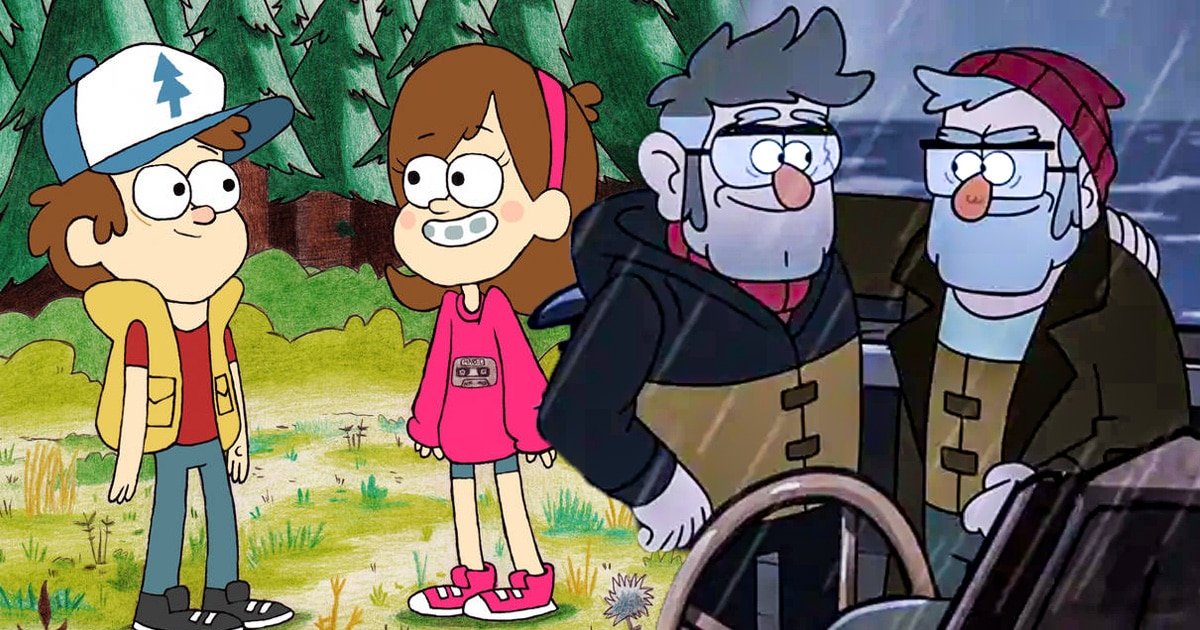
For many fans, the farewell to Gravity Falls felt premature, leaving a lingering question: was this beloved, cryptogram-laden adventure genuinely over, or was it cut short by a network? The truth, directly from creator Alex Hirsch himself, clarifies the situation entirely: the Gravity Falls official ending was a deliberate, artistic choice, marking the conclusion of a story he always intended to tell, not a cancellation forced upon the show.
This wasn't a case of plummeting ratings or creative differences; it was a rare instance of a showrunner being granted the agency to bring their vision to a perfect, planned close.
At a Glance: The End of Gravity Falls
- Intentional Conclusion: Creator Alex Hirsch chose to end the series after two seasons to ensure a complete, satisfying story arc.
- Not Canceled: The decision was 100% Hirsch's; Disney XD did not cancel the show.
- Critical Acclaim: The series maintained 100% on Rotten Tomatoes, garnered multiple awards, and high viewership, making it one of Disney XD's most successful shows.
- Planned from the Start: Hirsch envisioned the beginning, middle, and end of the Pines twins' summer adventure from the outset.
- A Grand Finale: The one-hour special "Weirdmageddon 3: Take Back the Falls" wrapped up the epic battle against Bill Cipher and the twins' summer journey.
- Story Lives On: The narrative continues in official books like Journal 3, Lost Legends, and The Book of Bill.
- Future Possibilities: Alex Hirsch remains open to more Gravity Falls content, with discussions ongoing about potential specials or a video game.
Unpacking the Truth: Why Gravity Falls Really Ended
When a popular show concludes, especially one with as passionate a fanbase as Gravity Falls, the immediate assumption often leans towards "cancellation." It’s a common fate in the television landscape. However, Gravity Falls defied this norm. Its finale, "Weirdmageddon 3: Take Back the Falls," which aired on February 15, 2016, wasn't a sudden axe falling but the culmination of a meticulously crafted narrative.
Alex Hirsch, the creative genius behind the series, was very clear about his decision. He stated unequivocally that ending the series was "100% his choice" to ensure the story reached its intended conclusion. This was a narrative architect choosing to lay down his tools not because he was told to, but because the blueprint was complete, and the structure stood tall and proud.
A Vision from the Outset: The Planned Arc of Mystery
Many shows evolve organically, often straying from their initial premise or extending indefinitely to capitalize on popularity. Gravity Falls was different. From the very beginning, Hirsch had a clear roadmap. He envisioned the complete story of Dipper and Mabel Pines' summer with their Grunkle Stan – a story with a defined beginning, a compelling middle, and a definitive end.
This approach allowed the creative team to weave intricate mysteries, hidden codes, and overarching character developments with purpose, knowing exactly where they were headed. Every cryptogram, every whispered secret, and every interdimensional anomaly contributed to a grander design, leading viewers towards a climactic revelation rather than a perpetual state of ambiguity. This commitment to a finite story arc is precisely what gives Gravity Falls its remarkable narrative strength and rewatchability.
"Weirdmageddon": The Epic, Intentional Climax
The conclusion of Gravity Falls wasn't a quiet fade-out; it was a spectacular, reality-bending apocalypse orchestrated by the infamous triangular demon, Bill Cipher. "Weirdmageddon" represented the peak of the show's mystery, humor, and heart, bringing all its beloved characters together for a final, desperate stand.
The Unfolding Chaos and a Family's Stand
The seeds of "Weirdmageddon" were sown when Grunkle Stan's decades-long attempt to retrieve his estranged twin, Grunkle Ford, from another dimension through a portal inadvertently created an interdimensional rift. Bill Cipher, ever the trickster, seized this opportunity, manipulating Mabel into unknowingly breaking the rift and unleashing a torrent of chaos, monsters, and reality distortion upon the unsuspecting town of Gravity Falls. Bill's ambition wasn't limited to the town; he aimed to spread his madness globally, demanding Grunkle Ford's help to achieve this universal pandemonium. Ford, naturally, refused.
The final confrontation saw the Pines family, along with the eccentric residents of Gravity Falls, unite against Bill. In a masterstroke of sibling loyalty and clever deception, Grunkle Stan and Grunkle Ford tricked Bill Cipher into entering Grunkle Stan's mind. There, in a moment of profound sacrifice and familial love, Grunkle Ford used a memory gun to erase Bill from existence, saving Gravity Falls and the world.
The Bittersweet Aftermath and Lasting Bonds
The cost of defeating Bill was initially high for Grunkle Stan, who lost his memories in the process. However, the show beautifully underscored the theme of memory and connection, showing how Mabel's cherished scrapbook and even her pet pig, Waddles, helped him recover. This narrative beat cemented the emotional core of the series: the power of family, friendship, and shared experiences.
As summer drew to a close, Dipper and Mabel, having matured significantly through their adventures, finally returned to California. Their journey was complete, their bond stronger, and their perception of the world irrevocably expanded. The ending provided a sense of closure while hinting at the enduring impact of their extraordinary summer, a testament to Hirsch's vision of a story that knew when to say goodbye.
A Legacy Beyond the "Ending": Why Gravity Falls Endures
Despite its relatively short run of two seasons, Gravity Falls carved out an enormous, indelible space in animation history. Its "official ending" was a bold statement that quality over quantity, and a complete story over an eternal one, can lead to monumental success and lasting impact.
Critical Acclaim and Record-Breaking Viewership
The series wasn't just popular; it was critically adored. It holds a rare 100% approval rating on Rotten Tomatoes for both its seasons, a testament to its consistent quality. This widespread acclaim translated into numerous accolades, including two Emmy Awards, three Annie Awards, and a BAFTA Children's Award.
Gravity Falls also proved that artistic integrity doesn't preclude commercial success. It garnered exceptionally high viewership, becoming Disney XD's highest-rated show in 2015 and early 2016. The series finale, "Weirdmageddon 3: Take Back The Falls," set a new network record as Disney XD's most-watched telecast ever, drawing 2.47 million viewers in the United States. These numbers decisively put to rest any notion of the show being a "cancellation" due to lack of performance.
An Influential Trailblazer for Modern Animation
Beyond its individual success, Gravity Falls has been widely recognized as a significant influence on a generation of animated shows that followed. It championed several trends that are now more common in animated storytelling:
- Series-long Story Arcs: Moving beyond episodic "monster-of-the-week" formats, Gravity Falls proved the power of a continuous, unfolding narrative, encouraging viewers to invest in the overarching plot.
- Complex Characters and Emotional Depth: The show tackled themes of growing up, sibling relationships, trust, and sacrifice with surprising maturity for a "kids' show."
- Multi-Generational Appeal: Its clever humor, intricate mysteries, and relatable characters resonated with both children and adults, fostering a shared viewing experience.
- Subtle Inclusivity: The show quietly contributed to broader trends like LGBTQ+ representation, paving the way for more explicit inclusion in later animated series.
Its unique blend of mystery, comedy, horror, and heartfelt drama created a benchmark for quality and ambition in animated television.
The Mystery Continues: Gravity Falls Beyond the Screen
While the animated series concluded, the world of Gravity Falls was far too rich to simply disappear. Alex Hirsch understood the insatiable curiosity of his fanbase and provided numerous avenues for fans to continue exploring the strange and wonderful town.
Official Books: Expanding the Lore
The narrative wasn't confined to the television screen. The Gravity Falls universe expanded significantly through official written works, offering deeper dives into the lore, characters, and unanswered questions:
- Journal 3 (2016): A replica of the mysterious journal found by Dipper, this book is filled with cryptograms, creature entries, and Grunkle Ford's notes, serving as a canonical extension of the series.
- Gravity Falls: Lost Legends (2018): A graphic novel featuring four new, never-before-seen adventures of Dipper and Mabel, further expanding the twins' summer escapades.
- The Book of Bill (2024): This teen-oriented novel offers a peek into the mind of the series' main antagonist, Bill Cipher, promising new insights into his origins and motivations.
These books aren't mere tie-ins; they are crucial additions to the Gravity Falls canon, beloved by fans for their humor, puzzles, and continued storytelling.
Video Games and Interactive Adventures
The world of Gravity Falls has also made its way into interactive media. Gravity Falls: Legend of the Gnome Gemulets, a video game, was released exclusively on Nintendo 3DS on October 20, 2015, allowing players to embark on their own adventure in the quirky town.
Perhaps the most famous interactive extension was the "Cipher Hunt" (2016), an international treasure hunt organized by Alex Hirsch himself. This real-life quest led fans around the globe to find clues, culminating in the discovery of a real-life Bill Cipher statue. This imaginative fan engagement further solidified the show's unique connection with its audience.
The Door's Still Open: Future Possibilities
Despite the conclusive nature of the series finale, the enthusiasm for Gravity Falls hasn't waned, and neither has Alex Hirsch's openness to revisiting the universe. As of June 2024, Hirsch has publicly expressed his willingness to continue the series with additional episodes, specials, or even another video game. Critically, discussions with Disney Television are reportedly ongoing.
This news offers a glimmer of hope for fans who might Explore Gravity Falls Season 3 or more adventures for the Pines twins. While nothing is confirmed, the fact that conversations are happening underscores the enduring legacy and potential of the Gravity Falls universe. It demonstrates that the "official ending" was a chapter, not necessarily the final word.
Addressing Common Questions and Misconceptions
The myth of Gravity Falls being canceled persists, but understanding the context surrounding its conclusion helps clarify why it was a choice, not a mandate.
Was Gravity Falls really canceled?
No, Gravity Falls was not canceled. Creator Alex Hirsch made the conscious decision to end the series after two seasons to tell a complete story with a planned beginning, middle, and end. He wanted to conclude the narrative on his own terms rather than letting it run indefinitely and risk declining quality.
Why did Alex Hirsch decide to end the show so early?
Hirsch felt that Gravity Falls was primarily the story of one incredible summer for Dipper and Mabel. He wanted to maintain the focus and impact of that singular, transformative period. He believed stretching the story beyond its natural conclusion would dilute its magic and risk creative burnout. The goal was to leave viewers with a perfectly packaged, satisfying experience rather than a drawn-out one.
Were there any behind-the-scenes issues that led to the ending?
The primary "issue" was Hirsch's creative desire to conclude the story. There were minor production changes over the show's run, such as the alteration of Grunkle Stan's fez symbol or the recasting of Louis C.K.'s minor voice role in 2017 following allegations against him. However, none of these were factors in the decision to end the series. The show enjoyed strong support from Disney and was a critical and commercial success.
Will there ever be a Gravity Falls Season 3?
Currently, there is no Gravity Falls Season 3 in production. However, Alex Hirsch has stated he is open to continuing the story in various forms (more episodes, specials, video games), and discussions with Disney Television are ongoing. While a traditional "Season 3" might be unlikely given the conclusive nature of the original ending, new stories set in the Gravity Falls universe are certainly a possibility.
How did the show impact other animated series?
Gravity Falls is widely credited with pushing the boundaries of children's animation. It demonstrated that shows could have complex, overarching narratives, deep lore, and mature emotional themes while still appealing to a broad audience. Its success paved the way for other serialized animated shows with strong storytelling and character development, influencing a new wave of creators.
The Enduring Appeal: A Story Told Right
The tale of Gravity Falls' official ending isn't one of disappointment or what-ifs. Instead, it's a testament to artistic integrity and the power of a story well-told and concluded with purpose. Alex Hirsch's decision ensured that Dipper and Mabel's summer adventure remains a perfectly formed gem in the landscape of television.
By choosing to end the series, Hirsch cemented its legacy as a masterpiece of modern animation ��� a show that knew precisely when to deliver its final, heartfelt goodbye. And while the animated series has concluded, the universe it created continues to resonate, inviting new generations of fans to explore its mysteries through books, games, and the enduring passion of its dedicated community. The memory of that summer in Gravity Falls, filled with gnomes, cryptograms, and a triangular demon, is truly timeless.